This has much to do with speaking as it does writing, however there are differences in the two I will cover later. If you write a research paper, article, short or long story, post on the web, or message to a friend there is a purpose and the writing fulfills a desire, right? No, not always. Getting better at getting into writing and simply jumping into the act takes time. I hope in this post that you find an exercise that will help you to thrive.
Where to begin?
Often the answer to this lies in what another provides. Writing isn’t something people do just on their own usually. Most people have been given direction and the building blocks of a plan before their start. A business might want a post on some social media that creates attachment. How do you create attachment? More simple writing exists such as work reports and filling out the day’s labors. There is a lot in a day and what matters that another might wish to hear? Writing has a goal often but how to begin is varied.
If you are in a business class, your topics will involve business, as big as that topic is. If you are in a history class you will write a history paper. There is a clear relation between the writing and the topic. Some things are harder than others. Let’s go back to that question of attachment.

I am attached to this comic I made
If you wish to invoke a thing, learn that thing. Understand your path, whatever it is, and learn what comes before you. If I want to build something into my words, I study the word. Let’s ask: What is attachment. Perhaps it is different for others but to me attachment is when one builds an emotional response to something and give it a place in their life. Sometimes attachment can be so strong that if the thing is missing someone might have a negative emotional reaction. Take a second. Think about what you are attached to. How has it over time been built into you? What level of attachment do you have for different things? Friends, family, animals, clothing, books, games, people of the past, weather, technology, and more. All these things can help to let you understand how you might begin. Then we look at the purpose. Build attachment… this is not easy. Usually it is constancy of place over time that builds attachment or something that resonates so well with us.
Another aspect that goes into writing is whether a thing has a positive or negative line. What this means is simple. Is there a positive or negative emotional response in building the attachment. Let’s look at two examples.
Remember that, in time, we are limited. We all live in a connected system. Us, you, them, we: a society. This is why it is important to provide constant care and maintain our shared ecosystem.
This is a fake ad I just made for a fake recycling campaign. It has a negative response. The feelings that it builds are positive towards recycling but there is a clear negative built into the message. If you don’t recycle you are a bad person and should feel bad. I never say this and neither will anyone who actually wishes to convince you, however, the reader is left to feel these words. Assumptions, things most people make in their lives, allow more inferences: There are people who recycle. The act is being publicized and thus has importance. Words like care, connected, maintain, and ecosystem place the message as perhaps a natural and good thing. If people aren’t doing this you can urge them with the emotions you create in these words to move towards a more natural and good state of being. This is control. Yes people are constantly influencing each other and you will never stop this. Looking at how it is done is perhaps a good way not to let others pull you hither and thither but more importantly offers insight into how this process functions. Not all will feel what I have described but such an advertising campaign would be longer than one advertisement. Let’s look at another.
Do more today by giving back to yourself. Starting from September and through October, bring in your glass and plastic and get cash back and a tax deductible for end of the year savings.
These words offer a positive response. There is an incentive and something that represents a positive outcome to action taken. Rather than simply avoiding feeling bad about not jumping to the call, feel like you can actually earn something in recycling. There is a benefit. Positive responses are all over advertisements: Ten, Twenty, Thirty percent off. Cash back. No down payment. Act now!
Study yourself most of all. It is what holds the key to where to begin. Is there a desire in your writing for an action taken by the reader? Think of your emotions and how they occur. You are not alone on this planet and are a good source on how some others might feel. How about writing just a story? You are free. Test yourself and your sound. Perhaps in your head speak the words. Try building a prompt. Take this one for example.
There is a man. His name is Digby. He is a bounty hunter. He is in love.
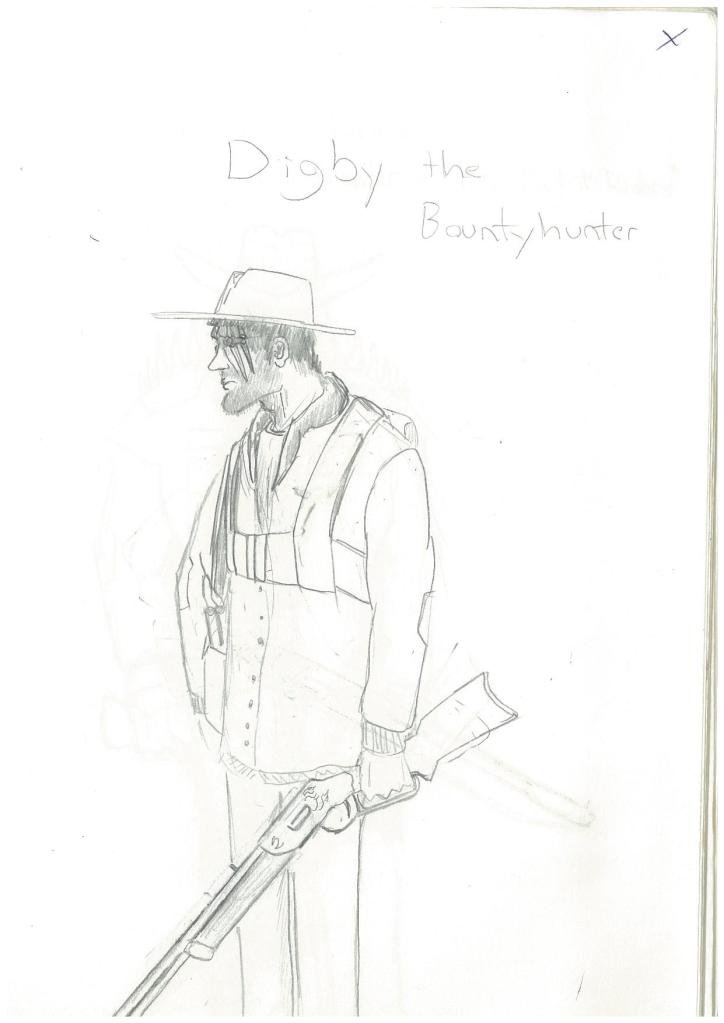
You aren’t bound to this image. Those four sentences are the only thing that will bind you. Who, When, Where, Why, What: Is he on a mountain or in a city? What or who does he hunt? Is my story going to be based on reality or will there be some fantasy? Will the person he loves be in the story or will it be simply some insight into his character like his thoughts? Is the person he loves dead? Is he in a city? Will I focus on him as a bounty hunter or will it be a look at his more mundane life?
Even if the answers to these things only become apparent as you write, they will make themselves known. Go on. Do it. Write. Once you finish read your words and find out who you are. It is a story about Digby, yes, but it is insight into yourself most importantly. Was it a happy or sad story? Why? Know thyself.
 Short stories, poetry, writing, and art